
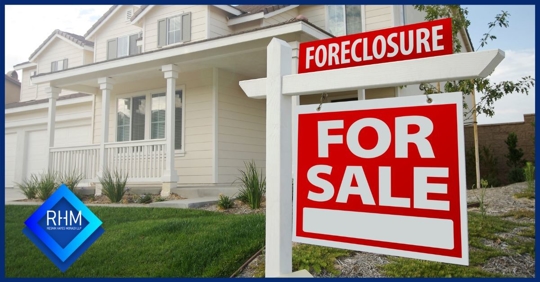
You open your mail in Los Angeles and see a Notice of Default from your mortgage company. Your stomach drops, and your mind jumps straight to losing your home, uprooting your family, and trying to figure out where you will live next. It can feel like the process is already out of your hands the moment you see that letter.
Many homeowners in Los Angeles assume that once they fall behind, foreclosure is automatic, or that a quick call to the bank will pause everything. In reality, California has a specific foreclosure process with its own clock, and lenders often keep that clock running even while you are talking to them. Knowing what that looks like, and what foreclosure alternatives you actually have in Los Angeles, can change the choices you make over the next few weeks or months.
At RHM LAW LLP, we have spent more than 20 years guiding Los Angeles homeowners and small business owners through situations like this. We have filed or overseen more than 7,500 bankruptcy cases, many of them involving active foreclosures in Southern California. In this guide, we walk through how foreclosure works here, what realistic alternatives exist, and how tools like loan modifications, short sales, and bankruptcy are actually used on the ground to protect homes or create a controlled exit.
How Foreclosure Works in Los Angeles and Why Timing Matters
In California, most residential foreclosures use a nonjudicial process. That means the lender usually does not file a lawsuit and go to court, and instead works through a trustee named in the deed of trust. The process typically starts with a Notice of Default that is recorded against your property and mailed to you. That notice is the lender’s formal statement that you are in serious default and that the foreclosure process has started.
After a Notice of Default, there is a period when you can often reinstate the loan by catching up past due amounts, plus fees and costs. If the default is not cured, the trustee can then record and send you a Notice of Trustee’s Sale. This is the notice that sets a sale date for your home at a public auction. Many homeowners are surprised at how quickly the sequence from default to sale can move if they do nothing, and how little communication they sometimes get beyond the required notices.
Because the process is handled by a trustee rather than a court, it tends to be more automated and less flexible than people expect. We regularly see Los Angeles homeowners who thought they were “in review” with the mortgage company, while the trustee kept moving forward. Phone conversations with a customer service representative do not necessarily stop the clock. Only certain types of loss mitigation reviews, written agreements, or legal protections, such as a bankruptcy automatic stay, cause formal postponements.
At RHM LAW LLP, we review Notices of Default and Notices of Trustee’s Sale with clients every week. We look at recording dates, scheduled sale dates, arrears amounts, and other liens on the property. That timing helps determine which foreclosure alternatives are still realistic. Some options, like loan modifications or short sales, often need more time to process. Others, like a Chapter 13 bankruptcy filing that triggers the automatic stay, can sometimes be used even very close to a sale. Understanding where you are in the timeline is the first step in choosing a workable strategy.
Talking to Your Lender: Forbearance, Repayment Plans, and Loan Modifications
The first thing many Los Angeles homeowners try is calling the lender. You might hear terms like forbearance, repayment plan, or loan modification. These are all forms of loss mitigation, but they work very differently. A forbearance is usually a short-term pause or reduction in payments, often followed by larger payments or a catch-up schedule. A repayment plan spreads your missed payments over several months by temporarily increasing your monthly mortgage payment.
A permanent loan modification is more significant. With a modification, the lender changes the original terms of your loan. That might include adding missed payments to the back of the loan, adjusting the interest rate, or extending the remaining term to lower the monthly payment. In Los Angeles, we see many homeowners focus on modifications because they want to stay in the home and need a payment they can actually afford with their current income.
From a lender’s point of view, the question is whether the modified payment will be sustainable. Servicers usually review your income, expenses, and total debt, often looking at a debt-to-income ratio, even if they do not use that exact phrase on the phone. They typically request a package that includes recent pay stubs or profit and loss statements for self-employed borrowers, bank statements, tax returns, and a hardship letter. If any of that is missing, inconsistent, or unreadable, the file often stalls or is denied.
We regularly see modification applications in Los Angeles fail for the same handful of reasons. Files arrive incomplete or with conflicting numbers. Small business owners submit profit and loss statements that do not match deposits in their bank accounts. Homeowners rely on verbal assurances that someone is working on the file without getting written confirmation that a sale has been postponed. When the trustee’s sale date finally appears, there may be little time left to fix problems in the file or to pivot to another option.
Because we have worked with thousands of financially distressed clients, we know how servicers tend to handle documentation and what they are looking for. At RHM LAW LLP, we often help clients assemble and organize modification paperwork as part of a larger plan that may include bankruptcy options if the lender ultimately says no or if the foreclosure timeline is too tight.
When a Loan Modification in Los Angeles Is Realistic
A loan modification tends to be realistic when the numbers line up. If you have a stable source of income, your total debt payments are not wildly out of proportion to that income, and the modified payment would not be dramatically different from your current one, lenders are more likely to work with you. In many LA cases, modest interest rate reductions or term extensions are enough to make a payment fit again, especially if you fell behind due to a temporary setback that has now improved.
On the other hand, we see many homeowners chase modifications for months when the underlying facts make approval unlikely. If your income has dropped permanently and cannot support even a reduced payment, if you have large arrears far beyond what can realistically be rolled into the loan, or if you are carrying heavy tax, credit card, or business debt on top of the mortgage, a modification alone often will not solve the problem. In those situations, we talk frankly with clients about whether bankruptcy, a sale, or a different exit strategy might serve them better than waiting on repeated denials.
Selling Before Foreclosure: Traditional Sales and Short Sales in LA’s Market
For some Los Angeles homeowners, the priority is not keeping the property at all costs, but protecting what equity they have or avoiding a foreclosure mark on their record. In a typical sale before foreclosure, you list the home with a real estate professional, sell it for enough to pay off the mortgage and closing costs, and use the remaining proceeds to regroup financially. In a market like Los Angeles, where values can be high, a traditional sale can often clear the debt and prevent a foreclosure auction if there is enough equity.
The challenge is timing. A sale takes time to list, market, and close, especially if there are inspection issues or buyer financing delays. The foreclosure trustee is still working through its process in the background. We often see LA homeowners who waited too long to list. By the time they decide to sell, the scheduled trustee’s sale date gives them only a short window, making it harder to find a serious buyer and close in time.
If you owe more than the home is worth, a short sale may be an option. In a short sale, the lender agrees to accept less than the full payoff in order to avoid going through the foreclosure process. The home is listed, an offer comes in, and then the lender reviews and either approves or rejects that offer. Short sale approvals can be slow because the lender is evaluating both the offer and your financial situation, and sometimes the investor behind the loan sets additional conditions.
For homeowners in Los Angeles, the local market cuts both ways. Strong demand can help attract buyers even for distressed properties, but it does not guarantee that the lender will approve a short sale quickly enough to beat a scheduled auction. There can also be questions about whether the lender will seek any deficiency or how a cancelled balance might be treated for tax purposes. California has various anti-deficiency protections that may apply, and tax treatment often depends on individual circumstances. These are areas where both legal and tax advice matter.
At RHM LAW LLP, we frequently work alongside real estate professionals when our clients decide that selling, rather than fighting to keep the home, best fits their situation. We review short sale approvals, offers, and timelines with clients so they understand what they are agreeing to and how the sale fits into their broader debt picture.
Deed in Lieu of Foreclosure and Cash for Keys Offers
Some homeowners hear about a deed in lieu of foreclosure as a simpler way out. In a deed in lieu, you voluntarily transfer ownership of the property back to the lender, and in exchange, the lender agrees to cancel the foreclosure. These arrangements are less common than people think, especially in Los Angeles, because lenders usually want a clean title. If there are junior liens, such as second mortgages or tax liens, a deed in lieu becomes much more complicated or impossible.
When lenders do consider a deed in lieu, they often require that the property be listed first to see if it can be sold on the market. They may ask for updated financial information and property condition reports before deciding. For homeowners, the potential benefit is a more controlled process and, in some cases, a slightly different impact on credit than a completed foreclosure, though both are serious negative marks.
Cash for keys offers are another concept that shows up frequently in Los Angeles. Either the lender, the mortgage insurer, or sometimes the investor or a new owner after foreclosure offers you money to move out by a specific date, leaving the property in reasonable condition. For the paying party, the goal is to avoid the time and expense of a formal eviction.
For the homeowner or former homeowner, cash for keys can provide funds for first and last month’s rent or moving expenses, which can be critical after a financially draining period. The tradeoff is that you are committing to leave the property and give up any legal disputes you might have had. Before signing anything, it is worth understanding what rights you are waiving, what the timing really looks like, and whether other foreclosure alternatives are still on the table.
We regularly review deed-in-lieu and cash for keys proposals with clients. Our role is to help them understand the documents, how these choices compare to selling, filing bankruptcy, or fighting the foreclosure, and what the practical consequences will be for their credit and debt situation.
How Bankruptcy Stops Foreclosure in Los Angeles
Many people see bankruptcy as the very last option and assume it always means losing their home. In reality, for a large number of Los Angeles homeowners we meet, bankruptcy is the tool that finally stops the foreclosure and gives them a structured way to manage their debts. When a Chapter 13 bankruptcy, Chapter 11, or in some cases a Chapter 7 case is filed, an automatic stay usually goes into effect. This is a legal protection that generally stops most collection actions, including many foreclosure sales, as soon as the case is filed.
Practically, this means that a properly filed bankruptcy can often halt a scheduled trustee’s sale, sometimes even when the filing occurs shortly before the sale time. The automatic stay does not erase the mortgage or make the default disappear. Instead, it freezes the situation and buys time while a repayment plan is proposed or other arrangements are made. In our Los Angeles practice, we use this tool regularly for homeowners who decide they want to keep their properties but cannot cure arrears all at once.
Chapter 13 is the most common chapter for individuals trying to save a home. In a Chapter 13 case, you propose a repayment plan that usually lasts three to five years. During that time, you make your regular mortgage payments as they come due and also pay an additional amount through the Chapter 13 plan to catch up on the arrears over the plan term. The Chapter 13 trustee and the court oversee this process. As long as you stay on track with both ongoing payments and plan payments, the lender typically cannot go forward with foreclosure on the past due amounts.
Chapter 11, including forms of small business or individual Chapter 11, can be used when mortgage and other debts are too high for Chapter 13 limits or when the situation is more complex. In Los Angeles, we see this with small business owners who own multiple properties or have significant business obligations tied up with their personal finances. Chapter 11 can offer more flexibility in structuring payments and modifying certain types of debt, but it is also more complex and requires careful planning.
One key advantage of bankruptcy is that it allows you to deal with more than just the mortgage. Many homeowners facing foreclosure are also dealing with IRS debt, large credit card balances, medical bills, or business liabilities. A Chapter 13 or Chapter 11 plan can address several of these debts at once. That broader relief can make it more realistic to afford the mortgage going forward. Focusing only on catching up mortgage payments without addressing the rest of your debt load often leads to repeat defaults.
At RHM LAW LLP, we focus our work on Chapter 7, 11, 13, and 20 bankruptcies and have filed or overseen more than 7,500 cases. Our decades of practice in Los Angeles bankruptcy courts give us a clear view of how judges and trustees approach plans that involve saving a home. We cannot promise a specific result in any case, but we can explain how these tools usually work in situations like yours and what it would look like to use bankruptcy as part of your foreclosure strategy.
When Chapter 13 Makes More Sense Than a Loan Modification
There are situations where a loan modification is worth pursuing first, and others where Chapter 13 is the more realistic path. For example, if you have fallen a few months behind after a short-term hardship but now have a stable income, and you have no significant other debts, a modification may be enough to reset the loan. However, if you are many months behind, carrying tax debt and credit cards, and facing an imminent sale date, Chapter 13 often gives you more control.
In many Los Angeles cases, we see that it is not an either-or decision. Some clients file Chapter 13 to stop the sale and stabilize their overall debt, then work on a loan modification while under the protection of the automatic stay. The bankruptcy case buys time, and any approved modification can later be built into the plan. Because we work with both the bankruptcy process and lender negotiations regularly, we can help you understand how these pieces might fit together for your situation.
Choosing the Right Foreclosure Alternative for Your Situation
Every homeowner who contacts us has a slightly different set of facts and goals, but a few core questions help frame which foreclosure alternatives are realistic. First, do you want to keep this property long term, or has that stopped being practical or desirable? Second, is your income stable enough to support the regular mortgage payment plus something towards arrears if needed? Third, do you have equity in the home that you want to protect from being eaten up by fees and a foreclosure auction?
If your income is stable and you mainly need time and structure to catch up, options like loan modifications and Chapter 13 are usually front and center. If the home is significantly underwater and you no longer wish to stay, selling, a short sale, or negotiating an exit such as deed in lieu or cash for keys may be a better use of your energy. If you have multiple properties or a mix of business and personal liabilities, Chapter 11 may need to be part of the conversation.
Timing is a separate but crucial factor. A homeowner who reaches out when they first receive a Notice of Default generally has more options than someone who calls a week before a scheduled trustee’s sale. Lender reviews for modifications and short sales take time, even in a busy market like Los Angeles. Bankruptcy can move faster, but even an emergency filing requires accurate information about your income, assets, debts, and pending legal actions.
In our same-day consultations at RHM LAW LLP, we walk through this decision process step by step. We look at your notices, recent mortgage statements, income documentation, and other debts to map out what is possible. The goal is not to push you into a single solution, but to explain which foreclosure alternatives fit your numbers and your goals so you can make an informed choice before deadlines close off options.
What to Bring to a Foreclosure Alternatives Consultation in Los Angeles
One of the most practical things you can do right now is gather a small set of documents that give a clear picture of your situation. Recent mortgage statements, all Notices of Default or Notices of Trustee’s Sale, and any letters from your lender about loss mitigation or assistance programs are a good start. Add your last few pay stubs or, if you are self-employed, recent profit and loss statements, along with your most recent tax return if you have it handy.
It also helps to list other debts you are juggling, such as credit cards, medical bills, personal loans, and any IRS or state tax balances, along with any wage garnishments or lawsuits. With this information, we can quickly see not just the mortgage problem, but the bigger financial picture that often explains why the mortgage fell behind. We can then talk about whether a targeted non-bankruptcy solution might work or whether a broader bankruptcy approach would put you on firmer ground.
Do not wait to reach out until you have every piece of paper in perfect order. In foreclosure situations, time matters more than perfection. We regularly meet Los Angeles homeowners who call only days before a trustee’s sale. Even in those high-pressure situations, there are sometimes options left, but they are narrower than they would have been months earlier. Bringing what you can and being honest about what is going on will let us use your consultation time effectively.
At RHM LAW LLP, we offer risk-free, same-day consultations and video appointments, and we can meet with you in English, Spanish, or Farsi. Our aim is to make it as straightforward as possible to sit down, review your notices and numbers, and talk through which foreclosure alternatives fit your situation in Los Angeles.
Talk With a Los Angeles Team That Understands Foreclosure Alternatives
Facing foreclosure in Los Angeles is overwhelming, but you are not powerless. California’s nonjudicial process, the way lenders handle loss mitigation, and the options in bankruptcy all fit together into a timeline. When you understand where you are in that timeline, and what choices are actually available to you, you can decide whether to fight to keep the home, sell it on your terms, or restructure your debts so you can move forward.
RHM LAW LLP has spent more than two decades helping Angelenos and small businesses navigate foreclosure threats, loan defaults, and complex debt problems. We use the tools described here, from loan modifications to Chapter 13 and Chapter 11 cases, every day to protect homes, preserve equity, or create orderly exits when staying no longer makes sense. If you have received a Notice of Default or Notice of Trustee’s Sale, or if you see trouble coming, we can review your documents and walk you through your foreclosure alternatives in a same-day, risk-free consultation.
Losing your home? Turn to a skilled foreclosure attorney from RHM LAW LLP. Contact us or call (213) 344-0043 to secure a consultation.